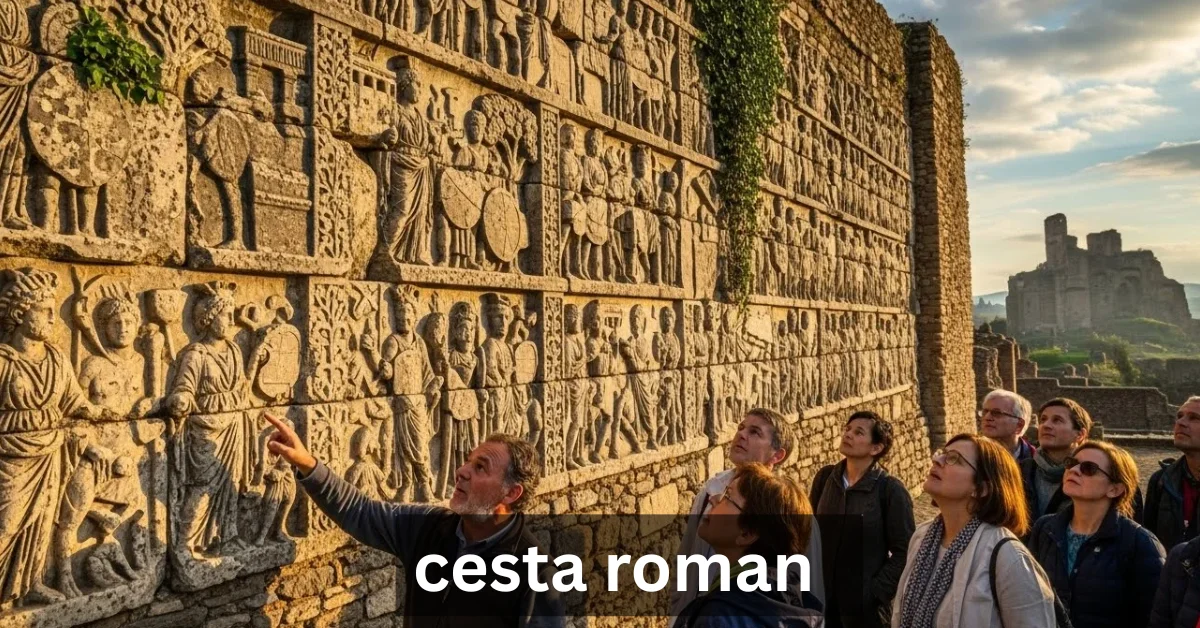
Cesta Roman literally translates to “Roman road,” referring to the ancient pathways constructed by the Roman Empire. Literally translated, cesta means “road” in several Slavic languages, and combined with Roman, it refers to the ancient Roman roads that connected the vast territories of the Roman Empire. These roads were more than mere pathways—they were engineering marvels, tools of empire-building, and arteries of culture and commerce.
Understanding cesta roman meaning opens a window into how ancient civilizations prioritized connectivity, strategy, and infrastructure. Roman roads were meticulously designed to facilitate trade, military movements, and communication, ensuring that the empire remained cohesive despite its enormous size. From the famous Via Appia to lesser-known pathways across Slovenia and Croatia, the remnants of these roads still influence our modern transport networks.
Today, the historical Roman pathways not only attract tourists but also inspire engineers and urban planners. Visiting cesta roman sites allows people to literally walk through history, experiencing the ingenuity and foresight of Roman engineering. This article will explore the history, construction, types, cultural significance, and modern legacy of these remarkable roads, highlighting why they remain relevant today.
The History and Origins of Cesta Roman
The Roman road network was one of the most impressive infrastructural feats of the ancient world. Beginning around 500 BCE and expanding throughout the Roman Republic and Empire, these roads connected cities, military forts, ports, and provinces. Roads were essential for the Roman empire transportation system, allowing for efficient troop movements, trade facilitation, and administrative control.
The Romans built roads for both practical and strategic reasons. Militarily, the roads enabled legions to travel swiftly, responding to uprisings or defending borders with unparalleled efficiency. Trade and commerce thrived along these routes, linking local markets to distant regions, and fostering cultural exchange via roads. Beyond logistics, roads symbolized the empire’s legacy of Rome, demonstrating its power, organization, and technological sophistication.
Several roads stand out in history. The Via Appia, often called the “Queen of Roads,” connected Rome to southern Italy, serving as a vital artery for both military and civilian purposes. Similarly, the Via Augusta stretched across Spain, linking key Roman settlements. In modern Slovenia and Croatia, Rimska cesta still reflects the Roman influence, preserving the engineering and route planning of the ancient network. These pathways represent more than infrastructure; they are tangible remnants of Roman engineering achievements that continue to inspire awe.
Engineering Marvels: How Roman Roads Were Built
Roman roads were built with precision, durability, and functionality in mind. The construction process followed a multi-layered approach, combining skillful engineering with high-quality materials. First, engineers would survey the land, ensuring that the route was straight whenever possible while accommodating natural obstacles like hills or rivers.
The roadbed typically included several layers. The bottom layer, called the statumen, consisted of large stones for stability. On top of this, smaller stones or gravel, known as the ruderatio, provided drainage. Finally, the summa crusta—a paved layer of large stone slabs or concrete—formed the smooth surface. Roman engineers also included curbs, ditches, and drainage channels to prevent flooding and erosion. This meticulous design ensured that roads could withstand heavy traffic and adverse weather for centuries.
Materials varied based on the region but often included stone, sand, and concrete—remarkably similar to modern road-building techniques. Roman roads like Via Appia and sections of Rimska cesta illustrate how ancient methods achieved long-term durability. The use of milestones, bridges, and Roman engineering techniques highlights the sophistication of these roads, demonstrating that Roman construction was both practical and visionary.
Types of Roman Roads and Their Functions
Not all Roman roads were created equal. The network included main highways, local roads, and specialized routes. Main roads connected major cities and provinces, facilitating trade routes and administrative control. Local roads provided access to rural settlements, markets, and villas, ensuring that even remote areas were connected to the empire.
Military roads were crucial for Roman military logistics, enabling legions to march efficiently and respond quickly to threats. Trade-focused roads supported the cultural exchange via roads, allowing goods, ideas, and people to move freely. Administrative roads enabled officials to maintain governance over vast territories. Regional examples across Europe show how cesta roman significance varied, adapting to geography, local needs, and imperial priorities.
In essence, Roman roads were multipurpose infrastructures, integrating commerce, defense, governance, and culture into a single, cohesive network. This adaptability is a key reason why many routes remain relevant today.
Cesta Roman in Modern Times
The legacy of cesta roman endures in contemporary Europe. Many modern roads follow the ancient routes laid out by Roman engineers, demonstrating the lasting influence of their road construction techniques. In Italy, sections of the Via Appia remain accessible to pedestrians and vehicles, preserving the engineering and historical context of the original road.
Preservation efforts and UNESCO heritage initiatives protect segments of Roman roads, ensuring that future generations can experience this remarkable infrastructure. Walking along these roads allows tourists to witness archaeological road remains, including Roman milestones and bridges that have survived for millennia. Roman roads are now a vital aspect of Roman road tourism, attracting historians, engineers, and curious travelers alike.
Modern infrastructure owes much to the Roman model. Concepts like layered road construction, drainage, and route planning continue to influence urban design. By studying cesta roman, engineers and planners gain insights into sustainability, resilience, and historical infrastructure management that remain relevant today.
Cultural and Symbolic Significance of Cesta Roman
Beyond their physical presence, Roman roads carry deep cultural and symbolic meaning. In literature, education, and philosophy, they represent the journey of history and human ingenuity. Roads like the Via Appia symbolize progress, connection, and civilization itself. In local cultures, terms like Rimska cesta in Slovenia and Croatia preserve the linguistic and historical impact of Roman engineering.
Roman roads also embody the legacy of Rome—a civilization that valued organization, connectivity, and innovation. They served as conduits for cultural exchange, spreading art, language, and technology across the empire. Today, walking along these roads offers a tangible connection to the past, allowing people to experience history in a visceral and memorable way.
Visiting Cesta Roman Today
Travelers interested in history and engineering can explore cesta roman sites across Europe. Walking ancient Roman roads provides a unique experience, blending education with adventure. Museums and heritage sites often display preserved road sections, Roman artifacts, and interactive exhibits highlighting Roman engineering achievements.
San Marino’s Cesta Tower (Second Tower) offers a secondary angle for tourism. Situated on Mount Titano, it was built on Roman foundations and now houses the Museum of Ancient Weapons. Visitors can explore the tower, learn about Roman and medieval history, and enjoy panoramic views of the surrounding landscape. Trails around the tower allow tourists to experience walking ancient Roman roads firsthand, connecting the physical and cultural legacy of Rome.
Heritage tourism emphasizes both preservation and engagement, making Cesta Roman sites ideal for educational trips, historical research, and leisurely exploration.
Famous Cesta Roman Sites Around the World
Several Roman road sites stand out for their historical importance and preservation:
- Italy: Via Appia and Via Flaminia are iconic routes that demonstrate Roman road-building excellence.
- France: Via Domitia connected Gaul to the Italian peninsula, serving trade and military purposes.
- Spain: Via Augusta linked Roman settlements, facilitating commerce and cultural exchange.
- Slovenia/Croatia: Rimska cesta preserves Roman engineering in central Europe, showing the empire’s wide reach.
Each site offers unique features, from preserved stone layers to milestones and bridges. These archaeological sites allow visitors to connect with the empire’s ancient road architecture and understand the empire communication system that kept Rome unified.
The Enduring Legacy of Cesta Roman
The legacy of Roman roads continues to influence modern infrastructure, urban planning, and transportation systems. Their durability and strategic planning offer lessons in resilience and long-term engineering. Roads like the Via Appia inspire contemporary engineers to integrate functionality, sustainability, and aesthetics into modern projects.
Studying cesta roman provides insights into Roman military logistics, trade optimization, and governance strategies. These lessons remain valuable for understanding how infrastructure shapes civilizations. The cultural and historical significance of Roman roads ensures that they remain relevant, not only as physical structures but also as symbols of human ingenuity.
Frequently Asked Questions
How were Roman roads built?
Roman roads were constructed in multiple layers: a stone foundation, gravel middle layers, and paved surfaces, designed for durability, drainage, and heavy use.
Can you visit Cesta Roman today?
Yes, many Roman roads, including Via Appia, Via Augusta, and Rimska cesta, are accessible to visitors. Heritage sites and museums also display preserved road sections.
Why did Roman roads last so long?
Roman engineers used advanced construction techniques, quality materials, proper drainage, and careful planning, which allowed roads to withstand centuries of use and weather.
What is the Cesta Tower in San Marino?
The Cesta Tower, or Second Tower, is a historical site built on Roman foundations. It houses the Museum of Ancient Weapons and provides panoramic views of San Marino.
Summary
Cesta Roman is more than a historical artifact—it is a testament to human innovation, foresight, and connectivity. Roman roads shaped trade, communication, military strategy, and culture, leaving a legacy that endures in modern infrastructure and heritage tourism. From Via Appia to Rimska cesta, these roads continue to educate, inspire, and fascinate.
By exploring, studying, or visiting Cesta Roman, we gain a deeper appreciation for the engineering, cultural, and historical achievements of ancient Rome. These roads remind us that progress, connection, and resilience are timeless values. Whether you are a history enthusiast, engineer, or traveler, Cesta Roman offers a journey through time, linking the past with the present.
Stay tuned with Cherrysakura!