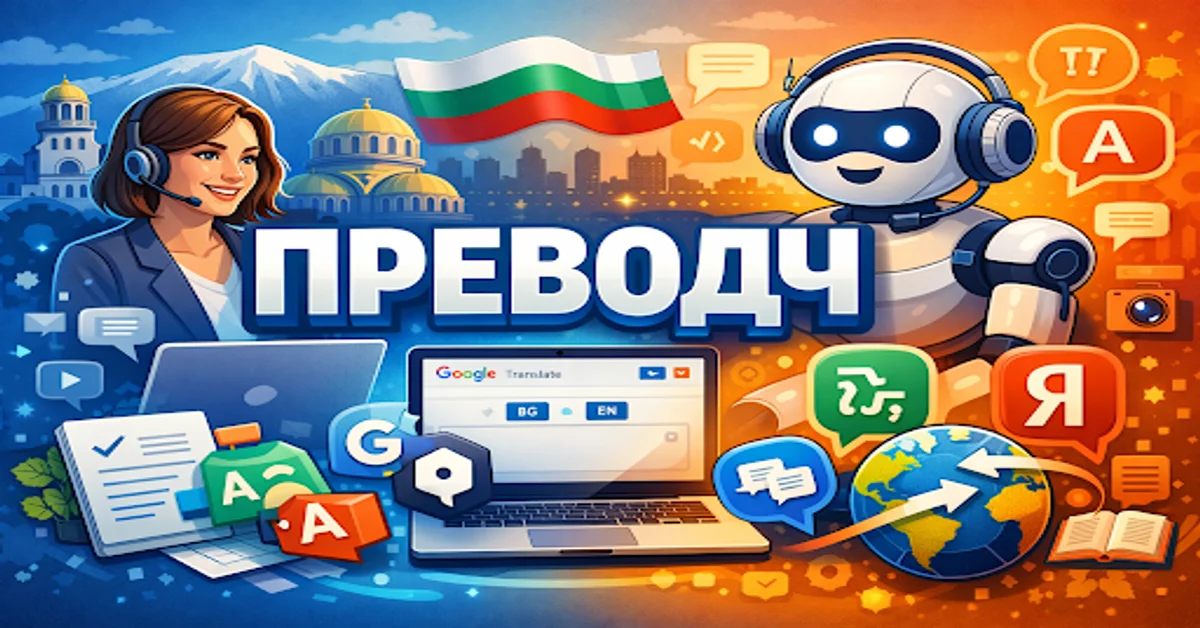
The term “преводч” is a fascinating example of how language evolves in the context of digital communication. While its formal equivalent in Bulgarian is “преводач”, meaning translator, “преводч” is an informal, colloquial shorthand that has emerged from the demands of online communication and fast-paced digital interactions. Users, especially Bulgarian speakers, often type “преводч” into search engines when seeking translation services, whether for text, speech, or web content. The word itself embodies a blend of cultural adaptation and technological convenience, highlighting the way people modify language to suit new digital contexts. Its usage reflects the practical needs of modern communication, where speed and efficiency often outweigh strict linguistic formality. In essence, “преводч” is not just a term for translation; it is a cultural phenomenon shaped by technology and user behavior.
In an increasingly interconnected world, the importance of translation cannot be overstated. Whether it’s facilitating cross-border business deals, academic research, or casual online interactions, the ability to translate content quickly and accurately is essential. The rise of digital translation services has made this possible, and the term “преводч” has become synonymous with accessing these tools in the Bulgarian-speaking community. From Google Translate to DeepL Translator and Microsoft Translator, the term serves as a gateway for users to navigate the complexities of language in real time. Understanding the nuances of “преводч” can enhance user experience by helping people choose the right tools for their specific needs, whether for professional, educational, or personal communication.
Unlike the English term “translator,” which has a broad application, “преводч” carries regional and cultural specificity. While both terms ultimately refer to the same concept—a person or tool that converts text or speech from one language to another—the use of “преводч” signals a familiarity with Bulgarian digital culture and an awareness of the informal linguistic shortcuts that have emerged in online environments. This distinction is critical for developers, content creators, and language service providers who want to tailor their offerings to Bulgarian-speaking audiences, ensuring that search results, app interfaces, and online content are optimized for this unique user behavior.
RELATED: 9253612736: Everything You Need to Know About
History and Evolution of Translation in the Bulgarian Context
The evolution of translation in Bulgaria reflects broader global trends where technology and language intersect to create new forms of communication. Traditionally, a “преводач” referred exclusively to a skilled human professional who was responsible for interpreting texts, speeches, or documents with accuracy and cultural sensitivity. Human translators were essential for legal documents, literary works, and international correspondence, where precision and context were paramount. However, the advent of digital technologies, including AI-driven translation tools, has fundamentally reshaped this landscape. The informal term “преводч” emerged as users sought quicker, more convenient ways to access translation services online, effectively bridging the gap between traditional linguistic practice and modern digital utility. This shift illustrates how language adapts in response to technological innovation and user behavior.
The proliferation of online translation platforms has played a pivotal role in popularizing the concept of “преводч.” Services like Google Translate, DeepL Translator, Microsoft Translator, and Yandex Translate have enabled Bulgarian speakers to translate content across a wide array of languages almost instantly, making communication faster, more efficient, and accessible to anyone with an internet connection. These tools have democratized translation, reducing the dependency on human translators for everyday tasks such as emailing, social media interactions, and web navigation. As a result, “преводч” has become less about formal linguistic accuracy and more about practical utility in digital life, reflecting the demands of a world that operates across languages and time zones.
Beyond the technological implications, the rise of “преводч” also reveals important cultural trends in Bulgaria and the broader Cyrillic-speaking world. Informal spelling and shorthand terms, particularly in online searches, reflect a pragmatic approach to language where the focus is on speed, convenience, and search engine optimization. Users often prioritize finding functional solutions over strict adherence to traditional spelling, and “преводч” perfectly encapsulates this behavior. This linguistic evolution not only influences SEO and online content strategies but also provides insights into how modern Bulgarians interact with language, technology, and global communication networks.
What Does a Translator Do?
Translation is far more than simply converting words from one language to another; it is the process of conveying meaning, context, and nuance across linguistic and cultural boundaries. A human translator brings deep understanding of both source and target languages, including idiomatic expressions, cultural references, and stylistic choices that may not have a direct equivalent in the other language. This makes human translators indispensable for tasks where accuracy and subtlety matter, such as legal documents, literary works, academic research, and sensitive business communications. By interpreting not just words but the intent and tone behind them, human translators ensure that meaning is preserved, cultural sensitivities are respected, and the resulting text feels natural in the target language.
On the other hand, machine translators, which fall under the category of machine translation (MT), use algorithms and Neural Machine Translation (NMT) technologies to provide instant translations at scale. Tools like Google Translate, DeepL Translator, and Microsoft Translator analyze large datasets of bilingual texts to learn patterns and generate translations automatically. While they are extremely fast and convenient, machine translators have limitations, particularly with idiomatic expressions, context-dependent language, and nuanced literary content. Despite these limitations, the ability to quickly access translations online, especially for informal or everyday tasks, has made machine translation a powerful complement to human expertise, bridging the gap for users who need rapid understanding in multilingual environments.
Translators, whether human or machine, perform several key functions. First, they facilitate text translation, converting written content such as documents, emails, articles, and websites into a different language. Second, audio and spoken translations allow users to communicate in real-time across linguistic boundaries, using platforms with voice recognition and speech output. Third, real-time translation services embedded in apps and software help users interact seamlessly across cultures and languages, creating an instant global connection. In practice, the choice between a human translator and a machine-based tool like преводч online often depends on the context, urgency, and required level of accuracy, balancing speed, cost, and quality.
Machine Translation and Online Tools
In today’s digital world, the term “преводч” has become almost synonymous with online translation tools. When Bulgarian users search for “преводч,” the majority of results point to machine translation platforms such as Google Translate, which supports over 100 languages, including Bulgarian. Google Translate allows users to translate text, documents, web pages, and even images, providing instant results that are sufficient for everyday communication. The platform’s integration of AI and NMT ensures that translations are increasingly natural, capturing grammatical structures and basic contextual meaning in a way that was previously impossible for early machine translation systems. This convenience explains why informal users have adopted “преводч” as a search term—it is a shortcut to accessing reliable, AI-powered translation services.
Beyond Google, other notable tools include DeepL Translator, Microsoft Translator, Reverso, and Yandex Translate. DeepL is particularly praised for its nuanced translations of European languages, leveraging AI to generate output that often rivals human translators in fluency. Microsoft Translator integrates translation features directly into Microsoft Office applications and real-time communication tools, making it invaluable for professional and corporate users. Reverso offers additional features for language learning, providing context, examples, and dictionaries alongside translation, while Yandex Translate is widely used in Cyrillic-based regions, delivering strong support for Bulgarian and Russian content. Together, these platforms illustrate the diversity of machine translation tools available under the umbrella of “преводч,” demonstrating that digital solutions can meet both casual and professional needs.
Machine translation is especially powerful for speed and convenience. Tasks such as translating emails, social media posts, or travel-related content can be completed instantly, eliminating the need for time-consuming human translation. However, machine translation has inherent limitations, particularly when dealing with complex literary or technical texts, idioms, or culturally specific expressions. Users must therefore exercise judgment in choosing when to rely on преводч tools and when to seek the expertise of a human translator. Understanding these boundaries ensures both efficiency and accuracy, reflecting the core purpose of “преводч” as a bridge between convenience and linguistic fidelity.
Technical Insights Behind “Преводч”
At the core of modern machine translation lies Neural Machine Translation (NMT), a form of AI that uses deep learning models to understand language patterns and predict accurate translations. Unlike older phrase-based systems that translated sentences word-by-word, NMT considers the entire sentence context, producing more fluent, natural, and grammatically correct output. Tools like Google Translate, DeepL Translator, and Microsoft Translator utilize NMT to provide results that are increasingly closer to human-level translations, particularly for languages with complex grammatical structures like Bulgarian. By leveraging large bilingual corpora and AI-driven algorithms, these platforms can learn patterns across millions of sentences, improving over time and adapting to evolving linguistic trends.
Real-time translation relies on advanced AI algorithms to process text or speech instantly, allowing users to communicate across languages without delay. Features such as voice recognition, OCR for printed text, and integration with web browsers or mobile apps have expanded the scope of “преводч,” transforming it from a simple word for “translator” into a comprehensive digital service. The processing of Bulgarian presents unique challenges, including the Cyrillic script, complex verb conjugations, and gendered nouns, which require specialized algorithms to ensure accurate interpretation and readability. This technical sophistication highlights why “преводч” searches are often tied to highly optimized translation software, rather than generic English-language tools.
Furthermore, the integration of Bulgarian language tools, online dictionary platforms like Linguee and WordReference, and localization software enhances translation accuracy. These tools allow machine translators to cross-reference multiple sources, check context, and maintain semantic integrity. The synergy between AI, linguistic databases, and user-driven input ensures that “преводч” serves both casual users seeking quick translations and professionals requiring reliable output for international communication. Understanding the technical foundation behind “преводч” empowers users to make informed decisions about which tools to use, balancing speed, cost, and quality effectively.
Practical Uses of “Преводч”
The practical applications of “преводч” are wide-ranging and continue to grow as digital communication becomes more essential in everyday life. One of the most common uses is translating documents, emails, and web content, allowing individuals and businesses to operate efficiently across languages. For instance, Bulgarian businesses expanding internationally often rely on преводч tools to translate marketing materials, legal documents, and customer communications into multiple languages. This not only ensures clarity but also helps maintain a professional image when interacting with global partners. Similarly, students and researchers use these tools to access resources and academic papers in foreign languages, enabling learning and knowledge exchange that would otherwise be limited by language barriers. The versatility of “преводч” makes it a critical tool for anyone needing fast, reliable translation in today’s multilingual environment.
In addition to document translation, преводч plays a significant role in international business communication. Platforms like Google Translate, DeepL Translator, and Microsoft Translator enable real-time communication across teams, clients, and partners from different countries, allowing businesses to overcome language obstacles without extensive delays. Voice recognition features and live conversation translation apps have become particularly valuable in virtual meetings and global collaborations, where every second of comprehension counts. By reducing the friction of cross-language communication, “преводч” facilitates more efficient negotiation, problem-solving, and coordination, demonstrating its tangible impact on productivity and business success.
Educational applications also illustrate the importance of преводч in the digital era. Language learners and students in Bulgaria often use online translation platforms to practice, understand, and verify language usage. Tools like Reverso and Linguee provide contextual examples alongside translations, helping learners grasp idiomatic expressions, sentence structures, and cultural references that pure dictionary translations cannot convey. By integrating these tools into learning strategies, users can enhance language acquisition while also benefiting from instant feedback and cross-language comprehension. Whether for academic purposes, personal growth, or professional training, преводч has become an indispensable part of modern education.
Comparing Human and Machine Translators
While machine translation provides convenience and speed, human translators offer unmatched accuracy and cultural insight. A human translator can interpret subtle nuances, idiomatic expressions, and cultural references that machines often struggle with, ensuring that the meaning and tone of the original text are preserved. This is particularly critical for tasks like translating legal contracts, literary works, or academic papers, where even small errors can have significant consequences. Human translators also have the ability to adapt content for different audiences, ensuring that the translated material resonates culturally and emotionally with the target language group.
In contrast, machine translators excel in tasks requiring speed and scalability. Using AI-driven platforms such as Google Translate or DeepL Translator, users can translate large volumes of text quickly, making them ideal for emails, social media posts, online content, or casual communication. However, machines may misinterpret idiomatic language, humor, or complex sentence structures, sometimes producing results that feel unnatural or ambiguous. For this reason, the choice between a human translator and a machine-based “преводч” tool depends on context. Every day, low-stakes translations benefit from AI tools, whereas high-stakes, complex, or creative translations require human expertise.
Cost, speed, and convenience are also important considerations. Machine translation tools are often free or low-cost, available instantly on mobile devices or web browsers, and accessible to anyone with an internet connection. Human translation, while generally more expensive and time-consuming, ensures high-quality, contextually accurate results. For Bulgarian users searching for преводч online, the decision often comes down to balancing efficiency against precision, weighing the urgency of translation needs against the importance of cultural fidelity and linguistic accuracy.
Cultural and Linguistic Implications
The emergence of “преводч” as a widely used term illustrates how digital communication is reshaping language and culture in Bulgaria. Informal abbreviations and shorthand terms have become common in online searches, reflecting a practical adaptation of language to technological needs. By using “преводч,” Bulgarian users signal that they are looking for fast, accessible translation solutions, often prioritizing convenience and immediacy over strict adherence to spelling or formal linguistic rules. This evolution represents a broader trend in which language adapts to digital contexts, blending cultural practices with technological functionality.
The online behavior associated with преводч also demonstrates the influence of SEO and search engine optimization on language use. Users who search for “преводч” are effectively shaping content discovery patterns, leading platforms like Google Translate, DeepL Translator, and Reverso to optimize their tools and interfaces for these informal queries. Over time, this has created a feedback loop in which digital language shortcuts are reinforced and normalized, further embedding them into everyday communication. The result is a fascinating intersection of culture, technology, and linguistics, where user behavior directly influences how language evolves in the online environment.
Cross-cultural communication is another key dimension of преводч’s significance. By facilitating real-time or near-instant translation across languages, “преводч” enables Bulgarian speakers to participate in global conversations, international business, education, and travel. Tools like Yandex Translate and Microsoft Translator ensure that Bulgarian speakers can interact effectively with speakers of English, Russian, and other languages, overcoming traditional barriers to understanding. In this sense, “преводч” is not just a tool or a term; it represents a digital bridge connecting diverse communities and fostering international collaboration.
Future of Translation and the Role of “Преводч”
The future of translation is closely tied to advances in AI and Neural Machine Translation. Ongoing improvements in context-aware algorithms, voice recognition, and semantic analysis promise even more natural and reliable translations for languages like Bulgarian, enhancing multilingual communication across digital platforms. As these technologies evolve, informal terms like “преводч” will likely continue to reflect the practical adaptation of language to digital contexts, guiding how users interact with translation services in real time.
Predicting trends in Bulgarian digital communication suggests that “преводч” will remain a key term for users seeking instant translation solutions. As global collaboration, remote work, and digital education expand, the demand for quick, accessible, and culturally aware translation tools will increase. “Преводч” will not only serve as a label for tools but also as a symbol of Bulgaria’s integration into global digital ecosystems, highlighting the merging of linguistic tradition with technological innovation.
In the broader scope, “преводч” represents the future of cross-language interaction, bridging cultural and linguistic divides in an increasingly connected world. By combining AI translation, human expertise, and contextual understanding, Bulgarian users can achieve effective communication in nearly any scenario, from professional correspondence to personal interactions. The term embodies the digital-first approach to language that is shaping how societies interact globally.
RELATED: Haslhof: Bavaria’s Unique Horse Retreat
Frequently Asked Questions
Is “преводч” a valid Bulgarian word?
While “преводч” is not formally recognized in dictionaries, it is widely understood as an informal shorthand for “преводач”, meaning translator. Its usage in online searches, apps, and casual conversation demonstrates its functional validity, particularly in digital and practical contexts.
Can Google Translate handle “преводч”?
Yes, Google Translate recognizes the term and provides Bulgarian translations and support for related content. This ensures users seeking “преводч” can access machine translation services quickly and reliably, highlighting the integration of informal language into digital tools.
How reliable is machine translation for Bulgarian?
Machine translation is generally accurate for everyday communication, such as emails, social media posts, and basic document translation. However, for complex legal, literary, or technical content, human translators are preferable, as AI may misinterpret context or nuanced meaning.
What are the best alternative tools for online translation?
In addition to Google Translate, users can leverage DeepL Translator for highly nuanced translations, Microsoft Translator for integration with professional tools, Reverso for context-based learning, and Yandex Translate for Cyrillic languages. Each tool offers unique features tailored to different translation needs.
How can users make the most of “преводч”?
For optimal results, users should combine machine translation with human verification when accuracy is critical, utilize contextual dictionaries such as Linguee, and leverage real-time translation apps for instant communication. Understanding the limitations and strengths of each tool ensures efficient and accurate results.
Summary
Understanding “преводч” provides valuable insight into how language, technology, and culture intersect in the modern digital era. It illustrates the practical use of machine translation, AI-driven tools, and human translators in facilitating communication, learning, and business interactions. While human translators remain essential for tasks requiring nuance and cultural sensitivity, AI-powered tools like Google Translate, DeepL Translator, Microsoft Translator, and Yandex Translate ensure speed, accessibility, and convenience for everyday use.
Bulgarian users can maximize the benefits of “преводч” by combining digital tools with human oversight, leveraging context-aware platforms, and understanding the limitations of machine translation. Ultimately, “преводч” is more than a word; it is a gateway to global communication, digital literacy, and cultural exchange, reflecting the evolving nature of language in a technology-driven world.